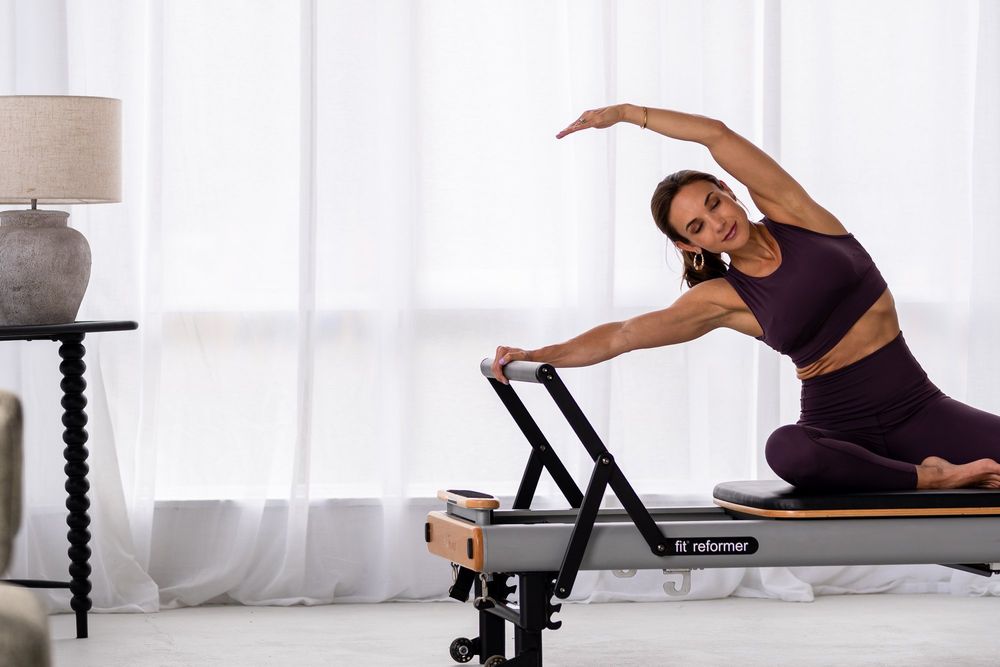
How often should you do Reformer Pilates at home?
Here's a simple weekly rhythm for Reformer Pilates at home, whether you're brand new or ready for more.
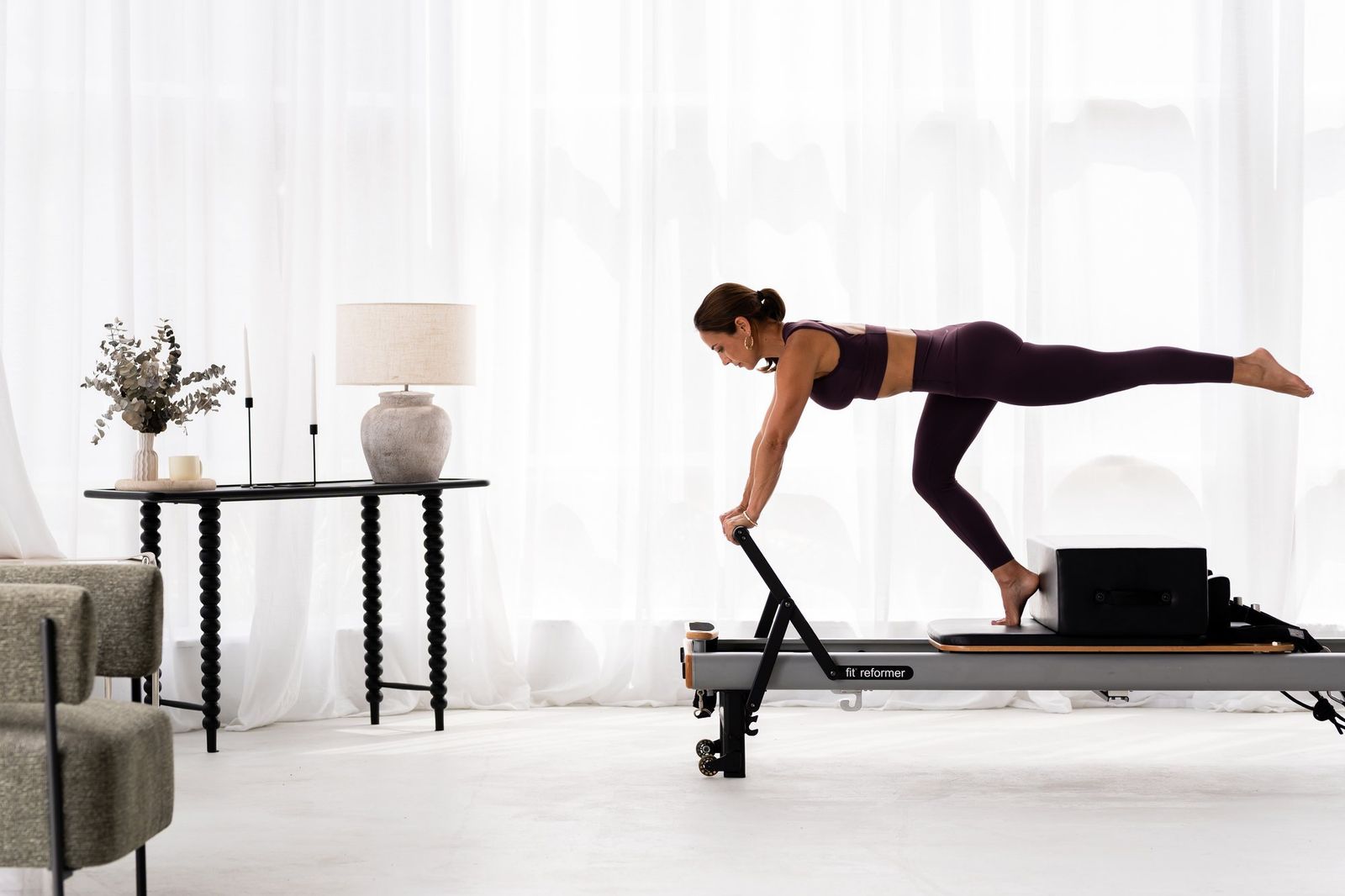
Why "how often" matters more than "how hard"
The workouts that change how you feel are the ones you keep doing. A routine you can repeat for months beats one huge week you can't.
The major health guidelines agree on the basics. The CDC and the World Health Organization both recommend at least 150 minutes of moderate activity a week, plus muscle-strengthening work for the major muscle groups on 2 or more days a week.
On the Reformer, the springs give your muscles resistance to work against. That makes it a natural way to get those strength days in at home.
If you're a beginner: start with 2 to 3 days
When you're new, your muscles, joints and nervous system are all learning at once. Give them time between sessions to catch up.
There's also some research on frequency. In a 2018 trial of 296 adults with chronic low back pain, Pilates twice a week improved pain and disability more than once a week over six weeks. It's one study in one group of people, but it supports twice a week as a sensible starting point.
- Do 2 to 3 Reformer sessions a week, with a day off the Reformer between them.
- Walk on the other days, even 20 minutes counts.
- Use the regressions in each class whenever you need them.
- After a few weeks of feeling good, add a session.
New to training at home? Our post "Reformer Pilates at home: the complete guide" covers setup and safety basics.
If you're experienced: follow The Method's rhythm
Once 3 days a week feels easy, you're ready for more structure. This is where The Method comes in, our weekly plan inside the app.
Here's how it's built:
- 6 training days and 1 rest or active recovery day each week.
- 4 of the 6 days are priority classes. On Core, those land Monday to Thursday. On Complete, you train all 6 days.
- Some days are a class, some are a class plus a 20-minute walk.
- 10,000+ steps a day keeps you moving outside of class.
- The Reformer track rotates Reformer, Mat, Barre and Strength. Don't have a Reformer? The Mat track uses Mat, Barre and Strength.
Every class has progressions and regressions, so you set your own level. That's how progressive overload works here: when a move feels easy, you take the progression. The daily classes change every week, so your body keeps getting something new.
A sample week
Here's how a week on the Reformer track could look. Your actual classes in The Method change weekly.
| Day | Session |
|---|---|
| Monday | Reformer class (priority) + 20-minute walk |
| Tuesday | Strength class (priority) |
| Wednesday | Reformer class (priority) + 20-minute walk |
| Thursday | Mat or Barre class (priority) |
| Friday | Reformer class + 20-minute walk |
| Saturday | Barre or Strength class |
| Sunday | Rest or active recovery: an easy walk, gentle stretching |
Why mixing it up works
Not every day needs to be a hard Reformer day. Mixing formats spreads the work across your body and keeps things fresh.
- Mat builds control without the support of the springs.
- Strength adds weights so your muscles get a different kind of challenge.
- Barre brings in balance, legs and glutes.
- Walks add easy aerobic minutes and help you reach your steps.
Curious how all this adds up to real strength? Read "Can Pilates build muscle?" next.
Recovery is part of the plan
Your body gets stronger between sessions, not just during them. That's why The Method keeps one day for rest or active recovery.
Active recovery means gentle movement: a relaxed walk, stretching, time outside with the kids. Sleep, water and good food matter here too.
Signs you're overdoing it
More isn't always better. Watch for these signals:
- Soreness that's still hanging around days later.
- Your form slipping, or you can't control the carriage like you usually can.
- Feeling tired all the time, sleeping badly or dreading your session.
- Pain in a joint, or any sharp pain during a move.
If you notice these, take the regression, swap a class for a walk or add an extra rest day. If pain doesn't settle, or you're pregnant, postpartum or managing an injury or health condition, check with your doctor before you continue.
Ready for a plan?
The Pilates X Strength 21-Day Challenge starts Monday, Nov 30, 2026. It's an easy way to try a structured week and build the habit with us.
Questions
Can I do Reformer Pilates every day?
You can move every day, but your body still needs recovery. The Method uses 6 training days with a mix of formats, plus 1 rest or active recovery day.
Is twice a week enough?
Yes, especially when you're starting out. Twice a week lines up with the CDC and WHO advice to do muscle-strengthening work on at least 2 days a week.
Should I walk on the same day as my Reformer class?
You can. Many days in The Method pair a class with a 20-minute walk, and walking is an easy way to add movement without extra strain.