Pilates vs. strength training: do you need both?
Pilates and strength training each have their own strengths, and here's how to get the best of both in one week.
Why this question comes up
You love your Pilates practice. Then someone tells you that you need to "lift heavy" too, and suddenly your plan feels incomplete.
The good news: it's not either/or. Pilates and strength training overlap, but each one has its own strengths. Put them together and you get a body that's strong, mobile and well controlled.
What Pilates does best
Pilates teaches you to move well, under control. Every class asks you to organize your body before you add effort.
- Core strength and control through the deep abdominals, back and pelvic floor
- Mobility and flexibility through the spine and hips
- Posture and body awareness you carry into everyday life
- Balance and stability, especially on one leg or in less stable positions
- Low-impact, joint-friendly training that's easy to do at home
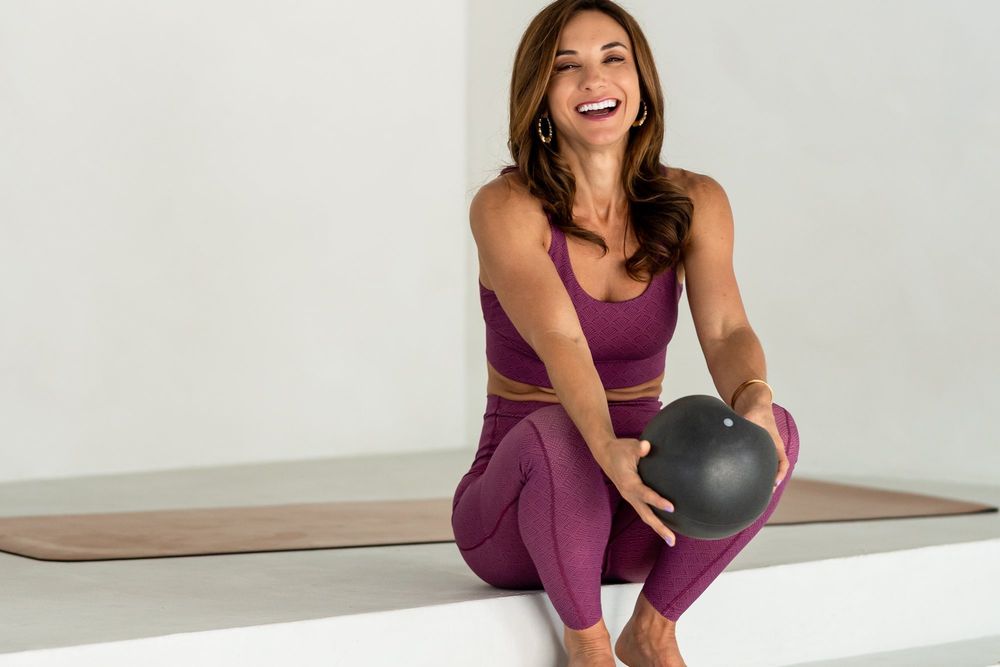
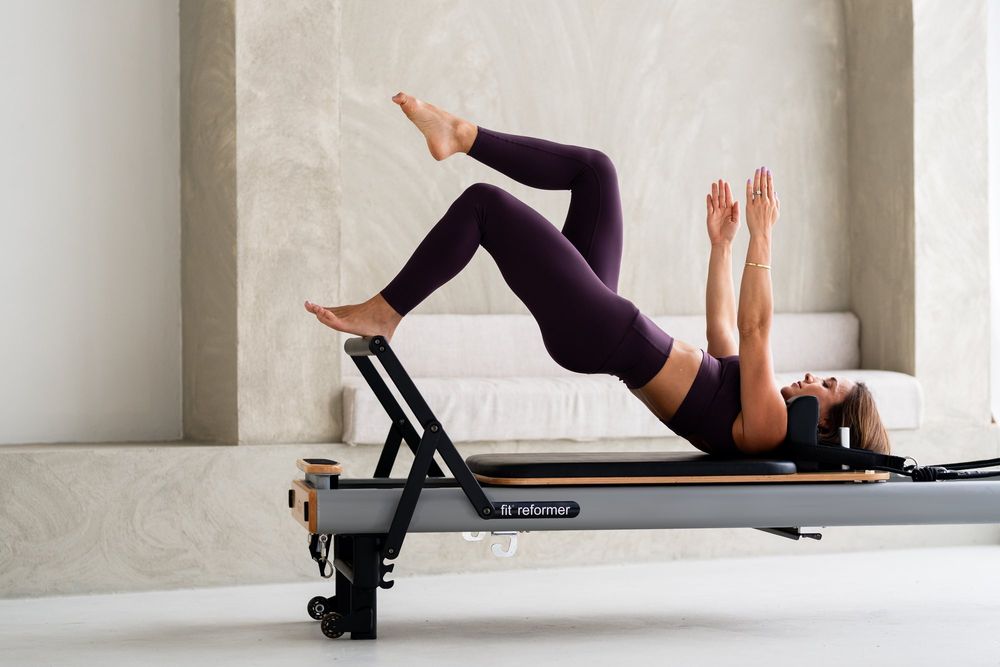
On the Reformer, springs add real resistance. On the Mat, you work against your own body weight and small props. When the work is challenging, that's muscle-strengthening work.
What strength training does best
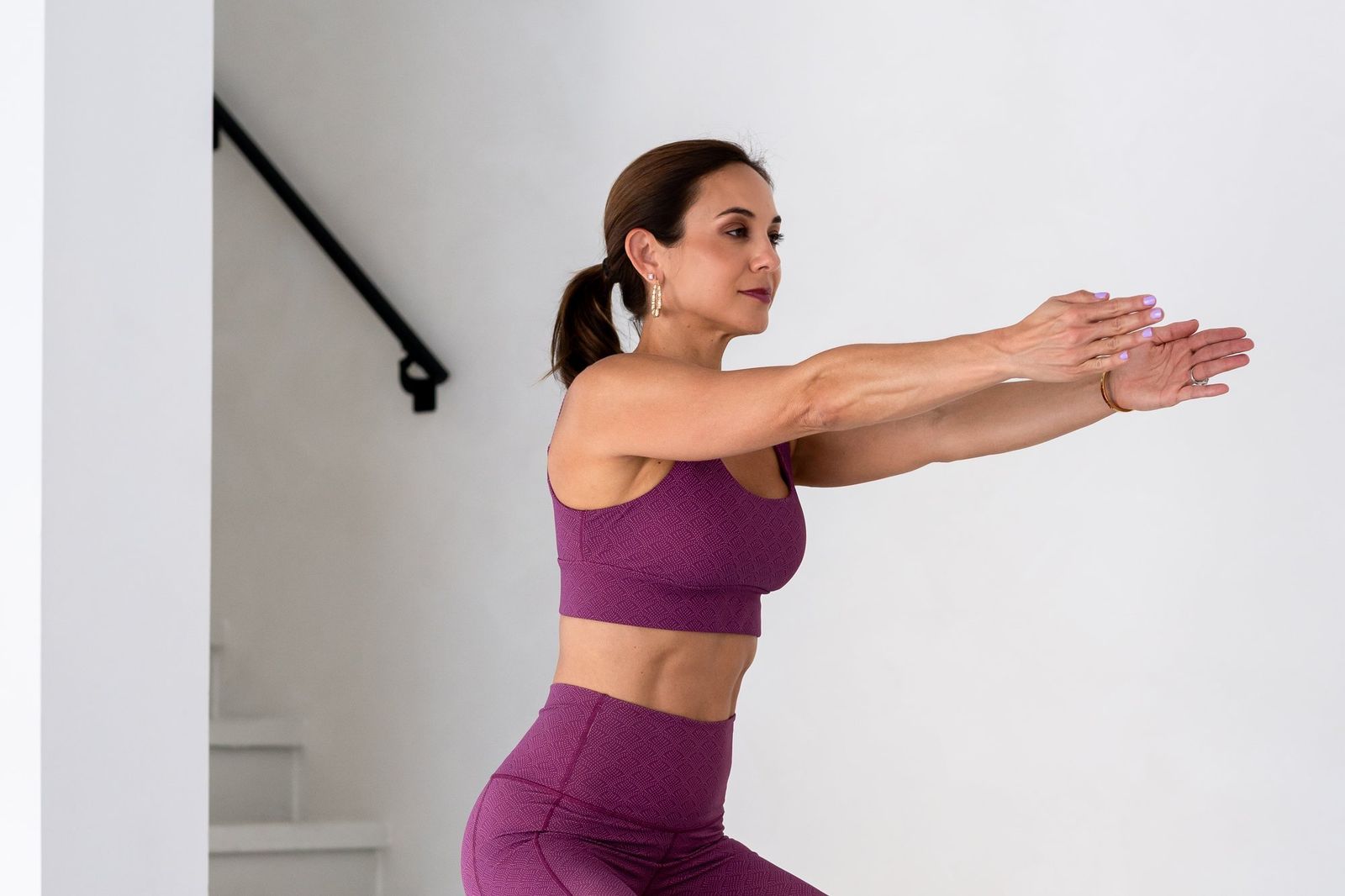
Strength training is built around one idea: progressive overload. You gradually ask more of a muscle, with more weight, more reps or more sets, so it keeps adapting.
- Building muscle and strength in a measurable way
- Easy-to-track progress (you can watch the dumbbell number go up)
- Loading big movement patterns like squats, hinges, lunges, presses and rows
- Challenging large muscle groups, like your glutes and legs, with heavier loads
The American College of Sports Medicine's updated 2026 position stand on resistance training, as summarized by REP Fitness, recommends training at least twice a week with progressive overload. For building muscle, the summary points to about 10 or more sets per muscle group per week.
What the research says about Pilates and strength
A systematic review by Pinto and colleagues looked at 11 randomized controlled trials comparing Pilates with other types of exercise. It found no meaningful difference between them for strength, balance and flexibility. The authors rated that evidence as very low to low quality, so treat it as a starting point, not the final word.
Our take: Pilates can build strength, and so can other training. You don't have to pick a side. You need enough challenge, often enough.
Why combining them works
Each one fills the other's gaps.
- Pilates gives you the control and alignment that make strength moves feel smoother.
- Strength training gives you a clear way to keep adding load over time.
- Mixing them keeps your week varied, which makes it easier to stay consistent.
- Together, they help you meet the World Health Organization's guidance of muscle-strengthening activities on 2 or more days a week, without living in a gym.
That's the idea behind Pilates Project: contemporary Pilates layered with strength training, props and smart intensity. Pilates that makes you stronger.
How to combine them in one week: The Method
The Method is our weekly plan for doing both, without overthinking it.
- 6 training days, 1 rest or active recovery day. Recovery is part of the plan, not a day off from it.
- 4 priority classes. Four of your six days are priority classes. Following Core? Those are Monday through Thursday. Following Complete? You train all six days.
- Class, or class + walk. Some days are a class on its own. Others pair a class with a 20-minute walk.
- 10,000+ steps a day to keep you moving between sessions.
- Pick your track. The Reformer track mixes Reformer, Mat, Barre and Strength classes. The Mat track mixes Mat, Barre and Strength.
Because Strength classes sit right alongside your Pilates classes, you train both in the same week without doubling your workload.
Progress at your own pace
Every class includes progressions and regressions, so you can make a move harder or easier on the day. Progressive overload is in your hands.
When a weight or spring setting feels easy for all your reps, go up a little next time. You can also add a set, slow the tempo or pick up a heavier dumbbell.
If you're pregnant, postpartum, recovering from an injury or managing a health condition, check with your doctor before starting a new program or increasing intensity.
Join the challenge: The Pilates X Strength 21-Day Challenge starts Monday, November 30, 2026. It's included for members, or you can join challenge-only for $49.
The bottom line
You don't need to choose. Do Pilates for control, mobility and a strong core. Do strength training for steady, measurable progress. Do them together, week after week, and let consistency do the rest.
Live in a body you love.
Questions
Can Pilates replace strength training?
It can cover a lot of it, especially on the Reformer, where springs add resistance. If your goal is to keep adding muscle and strength over time, dedicated strength work with progressive overload makes that progress easier to track.
How many days a week should I do strength training?
The World Health Organization recommends muscle-strengthening activities for major muscle groups on 2 or more days a week, and ACSM's updated guidance also points to at least twice a week. The Method builds this into your week for you.
Do I need a Reformer to do both?
No. The Mat track combines Mat, Barre and Strength classes, so you can follow The Method at home with a mat and a few props.
Related reading
Sources
- Is pilates better than other exercises at increasing muscle strength? A systematic review (Pinto et al., via DOAJ)
- American College of Sports Medicine Just Updated Their Guidelines for the First Time in 17 Years (REP Fitness summary of the ACSM 2026 position stand)
- Physical activity (World Health Organization)